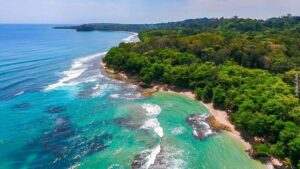
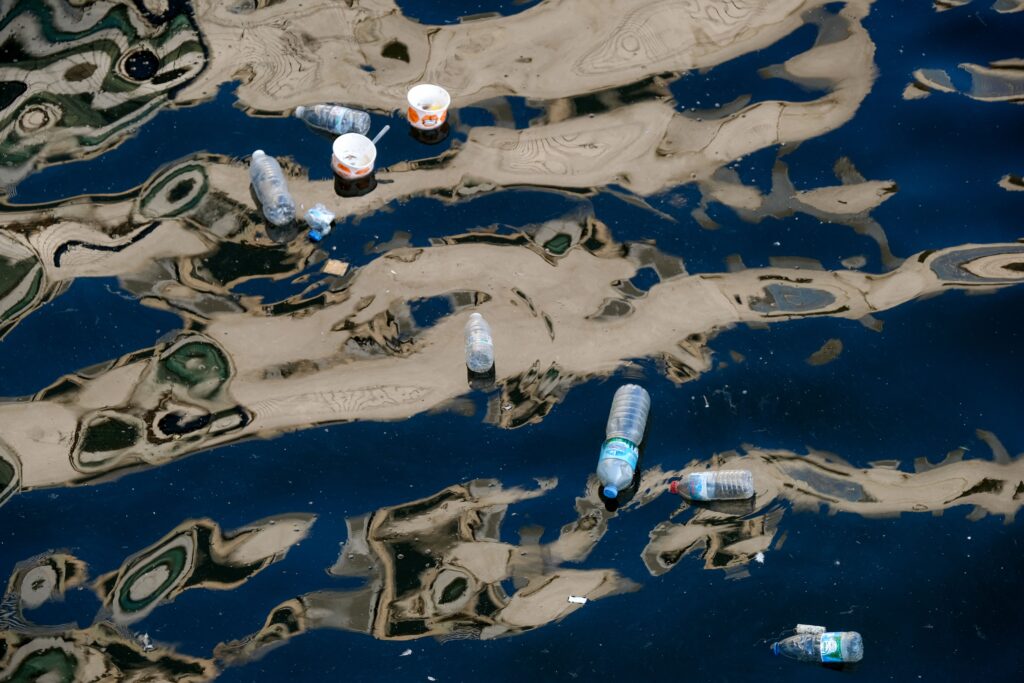
The accumulation of waste at Guacalillo Beach, in the canton of Garabito, has once again drawn attention to one of Costa Rica’s longstanding environmental challenges: pollution carried from inland areas through rivers until it eventually reaches the ocean.
A report published by The Tico Times on August 16, 2026, documented the current situation at the beach, where plastic bottles, cardboard, glass and other waste accumulate along the sand and surrounding vegetation. Guacalillo’s location near the mouth of the Grande de Tárcoles River means that a significant portion of the waste transported through the watershed eventually reaches this coastal area.
The situation is not new, but the images and the work carried out by local communities and environmental organizations during cleanup efforts show that the problem continues to have visible consequences for ecosystems and nearby communities.
A Problem That Begins Far From the Beach
The pollution affecting Guacalillo cannot be understood simply as a problem caused by waste being discarded directly along the coast.
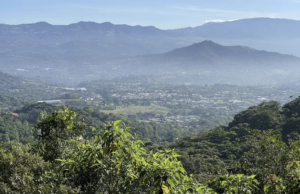
The Grande de Tárcoles River receives water and pollutants from an extensive watershed that crosses urban, industrial and agricultural areas before reaching the Pacific. Technical documents from Costa Rica’s Instituto Costarricense de Acueductos y Alcantarillados (AyA) have identified urban and rural development, wastewater, solid waste, industrial activities, and agricultural and livestock activities among the sources contributing to pollution in the watershed.
This means that a bottle, container or other piece of waste discarded far upstream can travel a considerable distance before eventually reaching the sea.
The connection between cities, rivers and the coast is precisely what makes Guacalillo such a visible point of a much broader environmental problem.
The Grande de Tárcoles River as a Pathway to the Ocean
For decades, the Tárcoles watershed has been the subject of studies and programs aimed at reducing pollution.
Costa Rica’s government has addressed this issue through its National Marine Litter Plan 2021–2030. The plan identifies actions related to solid waste pollution in rivers and coastal areas and highlights initiatives such as the National Clean Rivers Strategy, which seeks to promote the recovery and rehabilitation of urban watersheds.
The watershed is also addressed in official documents concerning wastewater treatment and sanitation. National planning documents explain that sanitation projects in the Greater Metropolitan Area are intended, among other objectives, to improve conditions within the Tárcoles watershed by increasing wastewater collection and treatment.
For this reason, the situation at Guacalillo should be viewed as part of a larger system: what happens in cities and communities throughout the watershed can eventually affect rivers, mangroves, beaches and marine ecosystems many kilometers away.
A Beach Trying to Recover Its Potential
Despite the pollution, Guacalillo also represents an opportunity for tourism and for community-based conservation initiatives.
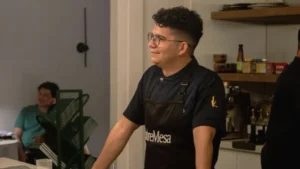
The Tico Times reports that local residents and volunteers are working to restore the beach, while there is growing interest in developing its tourism potential.
At the end of July 2026, Guacalillo opened the first Beach Cleanup and Volunteer Center in Puntarenas Province. The initiative is designed to support beach cleanups, environmental education and organized volunteer work.
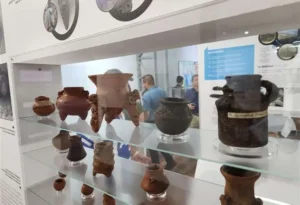
The center includes areas for volunteer training and activities, a native-plant nursery for reforestation, a plastic museum for environmental education and a protected area for sea turtle eggs laid along the beach.
These initiatives show that cleaning a beach can have an impact that goes beyond simply removing waste from the sand. It can also strengthen community participation, support environmental education and create new economic opportunities connected to conservation.
Plastic Remains One of the Major Challenges
Among the different types of waste reaching coastal areas, plastic is a particular concern because of its persistence in the environment and its ability to break down into increasingly smaller particles.
Costa Rica has introduced several policies aimed at addressing this issue. The National Decarbonization Plan includes integrated waste management and the transition toward circular economy models, while national environmental policies also promote the reduction of single-use plastics and greater recovery of recyclable materials.
Costa Rica’s National Circular Economy Strategy also identifies the Grande de Tárcoles watershed as an area where plastic pollution needs to be reduced.
The issue illustrates how pollution in the watershed is connected to broader national challenges involving waste management, recycling and the prevention of plastic entering waterways.
The Challenge Does Not End With a Cleanup
Beach cleanup campaigns are important, but they cannot solve the problem on their own.
Every bag, bottle or piece of waste removed from Guacalillo provides temporary relief for the beach. However, as long as waste continues to flow downstream from the watershed, tides and rivers can bring new debris back to the shoreline.
Recovering Guacalillo therefore requires a combination of actions: better waste management at its source, environmental education, adequate collection and treatment systems, improved recycling and material recovery, monitoring of waterways and continued community participation.
Costa Rica’s National Marine Litter Plan 2021–2030 includes prevention and mitigation measures aimed at reducing solid waste pollution in rivers and coastal areas, as well as encouraging coordination between institutions and communities.
Responsibility Begins Before the Waste Reaches the Ocean
The situation at Guacalillo is a reminder of a simple reality: ocean pollution does not necessarily begin at the beach.
It can begin on a street, in a stream, a river or within a waste management system that is unable to properly handle discarded materials. When these elements are part of the same watershed, their consequences become interconnected.
Costa Rica’s National System of Conservation Areas (SINAC) encourages visitors to natural areas to minimize waste generation and dispose of their waste properly, while supporting community-based services committed to environmental protection.
For Guacalillo, the challenge is twofold: stopping the flow of waste arriving from inland areas while demonstrating that a community affected by pollution for years can recover the environmental, social and tourism value of its territory.
The beach may be where we see the problem, but the solution begins much farther upstream.
Official Sources for Further Information
The environmental situation surrounding the Tárcoles watershed and waste management can be further documented through official sources including Costa Rica’s Ministry of Environment and Energy (MINAE), the Instituto Costarricense de Acueductos y Alcantarillados (AyA), the National System of Conservation Areas (SINAC) and the Ministry of Health.
MINAE’s National Marine Litter Plan 2021–2030 is particularly relevant for understanding national policies addressing solid waste pollution in rivers and coastal areas.
Technical documents from AyA also provide information on pollution sources within the Grande de Tárcoles watershed and sanitation efforts connected to the area.
Together, these sources provide an institutional framework for understanding that the situation currently visible at Guacalillo Beach is part of a much broader environmental challenge: managing waste and protecting the watersheds that connect Costa Rica’s communities and cities to the Pacific Ocean.