The communities of Dota and Orotina will develop new spaces designed to promote the well-being, participation and connection of older adults with their communities and the natural environment. Each municipality will receive US$10,000 to launch a Well-Being Garden project after being selected from 17 proposals submitted to the Semillas para la Acción competition, an initiative supported by the Yamuni Tabush Foundation.
The projects aim to transform or restore community spaces where older adults can take part in social activities, learning opportunities, nature-based experiences and initiatives that promote active aging.
Two communities selected from 17 proposals
The call was open to local governments that are part of the Global Network for Age-friendly Cities and Communities. Of the 17 proposals submitted, Dota and Orotina were selected to receive funding during this first stage.
The initiative is based on the idea that public and community spaces can play an important role in quality of life as people age. According to the Pan American Health Organization (PAHO), an age-friendly community adapts its services, structures and surroundings to better respond to the needs of an aging population, while promoting health, safety, inclusion and autonomy.
Dota to restore a therapeutic garden
In Copey de Dota, the funding will be used to rehabilitate the Valle de la Alegría Therapeutic Garden and Community Garden, located near the town center.
The project includes improvements to lighting, signage, sidewalks and ramps, with the aim of creating a safer and more accessible space for people of different ages and abilities.
Planting activities, training sessions and participatory design processes will also be developed. Older adults from the Valle de la Alegría group will play an active role alongside the Municipality of Dota, local cooperatives, the National Learning Institute (INA), the Costa Rican Electricity Institute (ICE), the Copey de Dota Development Association, universities, private companies and volunteers.
The project aims to make the garden more than just a physical space. It is intended to become a place where neighbors can strengthen social connections, participate in community activities and develop a greater sense of belonging.
Orotina to create a garden for pollinators
In El Mastate de Guayabal, Orotina, the Colibrí Project will create a community garden designed in part to encourage the presence of pollinators through the use of native plants.
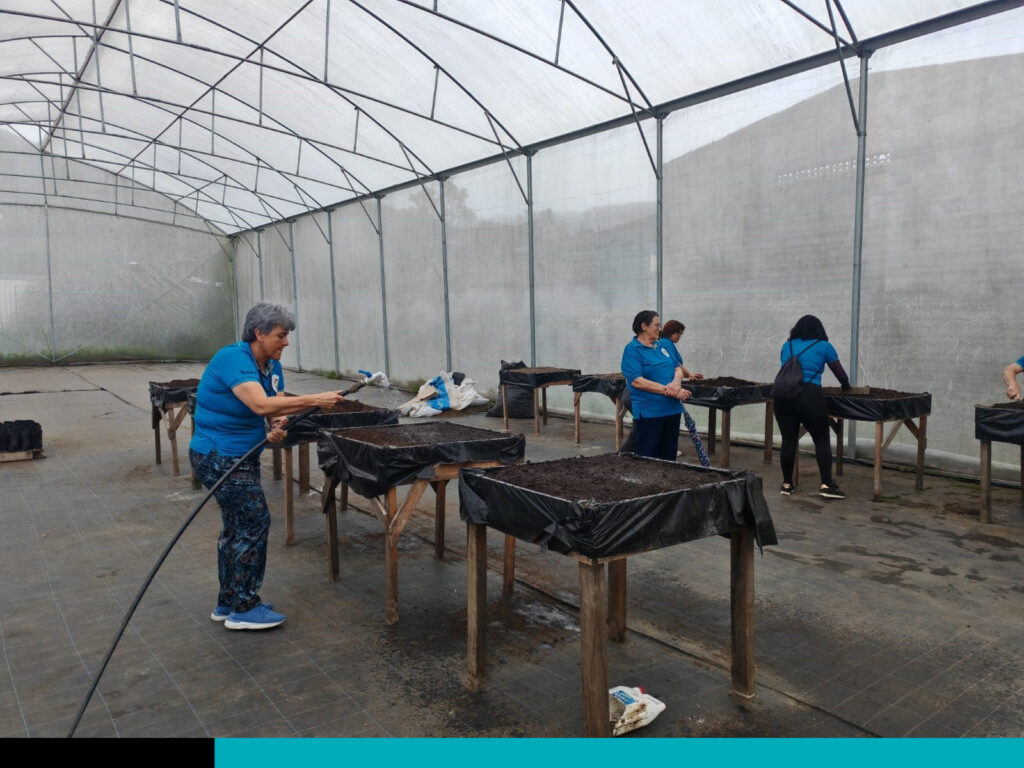
Older adults from the Gotas de Sabiduría group will play a central role in the project. They will participate in workshops focused on learning about, growing and protecting native species, combining community participation, education and biodiversity conservation.
The project will also include the creation of an illustrated collection documenting the plants grown in the garden. This resource will serve as an educational tool and help preserve the knowledge developed within the community for future generations.
An initiative supporting active aging
The creation of these gardens is part of a broader approach to healthy aging and the active participation of older adults in their communities.
PAHO explains that age-friendly cities and communities should provide older adults with opportunities to participate in everyday life, continue developing as individuals and contribute actively to their communities. They should also support older people in maintaining their dignity and autonomy as they age.
In Costa Rica, this approach has been developed over several years as local communities adapt to demographic aging. In 2024, PAHO reported that 30 Costa Rican cantons had joined the Global Network for Age-friendly Cities and Communities, including Dota and Orotina.
Community spaces as places to connect
The concept behind Well-Being Gardens is relatively simple: make better use of existing spaces to create places where people can meet, participate and remain connected to their communities.
Costa Rica’s National Council for Older Adults (CONAPAM) also promotes programs designed to support older adults within their families and communities while encouraging independence, autonomy and dignity.
In this context, projects such as those planned in Dota and Orotina can complement existing services by creating additional spaces for community participation and social interaction.
An initiative that could reach more communities
The Yamuni Tabush Foundation indicated that the funding available through the competition was sufficient to support only two of the 17 proposals submitted.
Following the interest generated by the call, the organization said it would seek additional sponsors among companies, foundations and other organizations in an effort to extend financial support to projects in other cantons.
Since 2023, the Foundation has developed Well-Being Garden projects in partnership with municipalities and community organizations in different parts of the country, including La Florida and León XIII in Tibás, Parque La Libertad, Hatillos and San Francisco de Dos Ríos. Another space is also under construction at the Dr. Moreno Cañas Clinic.
For Dota and Orotina, the new projects offer an opportunity to transform local spaces into places for connection, participation and learning, while placing older adults at the heart of community life.
Sources
Information for this article was cross-checked with the Pan American Health Organization (PAHO), the Costa Rican National Council for Older Adults (CONAPAM) and the information published about the Semillas para la Acción initiative.