

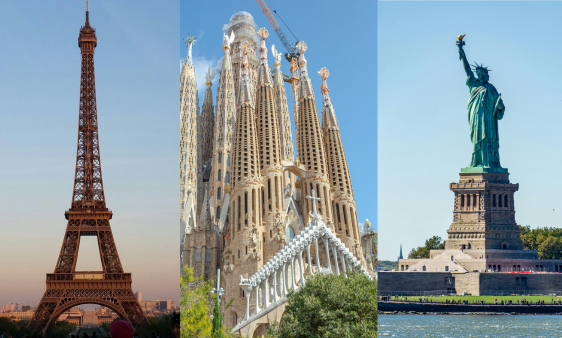
The global tourism industry has entered a decisive phase of structural transformation between 2025 and 2026. For decades, a nation’s success was measured exclusively by the volume metric: how many heads crossed a border and filled a hotel room. Under this old paradigm, France remains the undisputed powerhouse, maintaining its crown as the world’s most visited destination with 102 million international arrivals in 2024, followed by Spain (93.8 million) and the United States (72.4 million).
However, in the new experience economy, a more valuable and harder-to-achieve indicator has emerged: tourism loyalty. According to the most recent consumer sentiment analyses and behavioral data from 2026, the leadership map changes radically when the question is not “Where did you go?” but “Where do you desperately want to return?” In this return intention ranking, Costa Rica has risen as the world leader, surpassing cultural giants like Italy and Japan.
This phenomenon signals a tectonic shift in traveler psychology. While volume tourism often becomes a checklist of monuments (“ticking off landmarks”), loyalty tourism is based on tourist happiness. Recent academic studies (2025) have confirmed an almost perfect statistical correlation (coefficient of 0.921) between the happiness experienced at a destination and the intention to revisit it.
On the 2025-2026 horizon, a destination’s success is no longer defined solely by its capacity for mass attraction, but by its capacity for retention. The countries leading this new hierarchy—Costa Rica, Italy, and Japan—do not merely offer vacations; they facilitate a deep emotional connection that transforms the visitor into a “repeat traveler,” thereby ensuring superior economic resilience against the volatility of global markets.
I. The New World Map: Who Wins in Loyalty?
While the headlines of the economic press celebrate that global tourism has finally overcome the traumas of the pandemic—reaching a record 1.520 billion international arrivals in 2025—a more granular analysis reveals a critical divergence between destinations that simply accumulate visitors and those that truly win their hearts.
In this new world map, success is no longer a popularity contest based on volume, but a battle for emotional retention and Customer Lifetime Value.
The Return Intention Ranking: The Central American Surprise
According to consumer sentiment analysis conducted by SCS Chauffeurs and corroborated by global platforms such as Time Out in 2026, the desire to revisit a destination does not correlate directly with its monumental fame. After analyzing more than 8,000 data points from reviews and traveler votes, the ranking of destinations with the highest return intention presents a distinct world order:
- Costa Rica: With 895 mentions and votes expressing a “desire to return,” it leads the global table.
- Italy: Its inexhaustible cultural depth keeps it at the top of European loyalty.
- Japan: Safety and hospitality (Omotenashi) guarantee repeat visits.
- United Kingdom
- Portugal.
Why does Costa Rica beat the giants? It is paradoxical that a small country, which in 2025 received approximately 2.69 million tourists (a modest growth of 1% compared to the previous year), surpasses in loyalty powers that receive forty times more visitors. The answer lies in the intensity of the experience. While mass destinations often suffer from overtourism that exhausts the visitor, Costa Rica has managed to position itself as a sanctuary of “anti-tourism”: places where disconnection and nature prevail over queues and rushed selfies. Regions such as the Osa Peninsula, described as one of the world’s greatest ecological adventures, offer a raw authenticity that generates an emotional bond difficult to replicate in saturated urban environments.
The Disparity: Volume vs. Value
To understand the magnitude of this loyalty achievement, it must be contrasted with the traditional volume leaders, who dominate the market in absolute terms but face different challenges:
The Volume Giants (2024-2025):
- France: Maintains its undisputed hegemony with 102 million arrivals in 2024. However, its average expenditure per visitor is around $755, a figure suggesting shorter stays or lower-yielding transit tourism within Europe.
- Spain: Occupies second place with 93.8 million visitors.
- United States: Although third in arrivals (72.4 million), it is the absolute leader in revenue, generating $215 billion with an average tourist spend of $2,970.
This is where the Costa Rica model shines: although its arrivals are a fraction of France’s, its capacity for value extraction is remarkably high. In 2024, the average expenditure per person in Costa Rica reached $2,062, a competitive figure that surpasses many mass destinations and demonstrates that loyalty translates into a greater willingness to invest in the experience.
The 2025/2026 Paradigm Shift: From “Seeing” to “Feeling”
Traveler behavior has mutated. Trend reports for 2026, such as those from Euromonitor and CNBC, identify a growing rejection of saturated destinations in favor of experiences that offer “passion and purpose”.
- The Search for the “No-Think Holiday”: Travelers, fatigued by decision-making, are returning to destinations where they blindly trust the quality of the experience without the need to micro-manage every detail. The “Essential Costa Rica” brand capitalizes on this by guaranteeing sustainability and quality standards that reduce traveler friction and anxiety.
- Regional Circulation as a Retention Strategy: Japan, in third place for loyalty, has broken records with 42.7 million visitors in 2025. Its success in retention (93.4% return intention in rural areas) is due to a deliberate strategy of moving tourists beyond Tokyo and Kyoto toward regional areas, offering seasonal incentives (snow in winter, cherry blossoms in spring) that compel the tourist to return to “complete” the experience.
This decision fatigue has given rise to a boom in services operating under absolute curation. This is where proposals like Green Circle Experience become indispensable in the Costa Rican ecosystem. By acting as a bridge of trust between the traveler and the destination, GCE materializes the concept of the ‘No-Think Holiday’, allowing the visitor to delegate logistical micro-management to expert hands. When quality is guaranteed by a concierge who understands the ethics of regenerative luxury, the traveler stops planning to start feeling, eliminating the friction that often prevents return.
In conclusion, the tourism map of 2026 teaches us that while France is the country everyone visits once, Costa Rica, Italy, and Japan are the countries where people feel they must return. In an uncertain global economy, that loyalty is a far more stable financial asset than pure volume.
II. Case Study A: Costa Rica – The Leader of Regenerative Tourism
Costa Rica has achieved something few destinations manage: redefining luxury. For the traveler of 2025 and 2026, luxury is no longer about material opulence, but about the capacity to reconnect with what is fundamental. This strategic shift is what has catapulted the country to first place in return intention, supported by a sophisticated evolution of its national identity.
The Evolution of the Brand: From Ingredients to Values
For years, the slogan “No Artificial Ingredients” defined Costa Rica. However, the transition to the country brand “Essential Costa Rica” marked a shift in maturity. This new identity does not merely sell nature, but a value system: Excellence, Sustainability, Innovation, Social Progress, and Costa Rican Origin.
The most recent international campaign, “Only the Essentials,” brilliantly capitalized on global post-pandemic fatigue. By inviting tourists to reconnect with nature, culture, and personal well-being, Costa Rica stopped selling “destinations” and started selling “states of mind.” This strategy has been effective in attracting a profile of tourist who seeks something deeper than a photo: they seek belonging. Focus group studies revealed that visitors no longer value only biodiversity, but also the warmth and “Pura Vida” lifestyle of the locals (the “ticos”), seeing them as peaceful, resourceful people committed to their quality of life.
Beyond Sustainability: The Regenerative Turn
If sustainability is about “doing no harm,” regeneration is about “leaving the place better than you found it.” Costa Rica leads this global vanguard.
- Active Participation: The loyal tourist returns because they feel part of the solution. In places like Rancho Margot (Arenal area), visitors learn about self-sufficient farming and soil restoration, participating in a regenerative life cycle.
- Biodiversity Sanctuaries: On the Pacific coast, hotels such as those in Punta Leona add voluntary fees to fund the conservation of the scarlet macaw and habitat restoration.
- The Deep South: The Osa Peninsula remains the bastion of raw authenticity, attracting travelers who seek intense ecological adventures far from mass-market routes, consolidating the country’s reputation as an “anti-mass-tourism” destination.

Behavioral Economics: The Bet on High Value
The financial data from 2024-2025 validates the quality-over-quantity strategy.
- Record Spending: While tourist volume grew a modest 1% in 2025 (reaching 2.69 million air arrivals), average expenditure per visitor soared to $2,062, the highest figure in Central America.
- Extended Stays: Loyalty translates into time. The average tourist stays between 12 and 13 nights in the country, a duration significantly higher than that of conventional beach destinations, allowing for greater dispersion of tourism dollars into local communities.
- Consumption Sophistication: A Mastercard study revealed that 84% of tourism spending is made by card, indicating a high-purchasing-power visitor with confidence in the local financial system, especially in luxury areas such as Guanacaste.
The Paradox of Success: Prices, Currency, and Competition
However, leadership in loyalty faces serious structural threats. The National Chamber of Tourism (CANATUR) has warned of a worrying slowdown against regional competitors. While Costa Rica grew by just 1% in 2025, neighboring countries such as Guatemala (+10%), Mexico (+6%), and Colombia (+4%) are capturing a larger market share.
Why is growth slowing if loyalty is high?
- The Exchange Rate Trap: The historical appreciation of the colón (which touched ₡488 per dollar at the end of 2025) has made the destination more expensive. For the tourist, Costa Rica is now significantly more expensive than Bali, Thailand, or Colombia. For the local entrepreneur, it means receiving fewer colones for their dollars to cover rising operating costs, which has triggered staff cuts and a loss of competitiveness.
- Insecurity: The increase in the perception of crime and the travel warnings issued by key markets such as the US and Canada have begun to erode the image of a “safe paradise” that underpinned the country brand.
In summary, Costa Rica has won the hearts of travelers (loyalty), but is at risk of losing the battle of the wallet against more affordable options in the region. The challenge for 2026 will be to maintain its premium value proposition without becoming inaccessible, otherwise it risks becoming an aspirational but unattainable destination, ceding ground to neighbors that offer similar experiences at lower cost.
III. Case Study B: Italy and Japan – Cultural Depth as a Magnet
If Costa Rica is the leader in emotional connection with nature, Italy and Japan represent mastery in managing cultural depth. Occupying second and third place respectively in the return intention ranking, these nations demonstrate that the key to loyalty in mature destinations is not the iconic monument, but the capacity to disperse the visitor toward the regional and the everyday.
Italy: The “Slow Tourism” Revolution and the Lifestyle
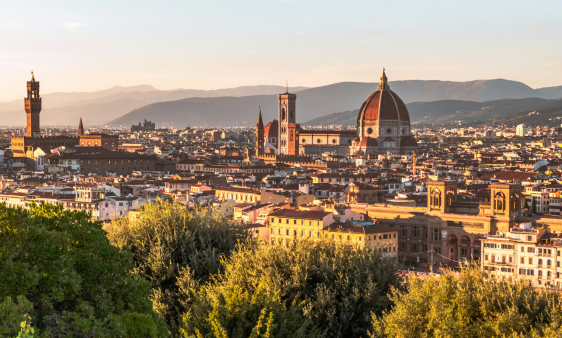
Italy has recorded impressive figures, reaching 185 million tourist arrivals in 2025, an increase of 7.1% compared to the previous year. However, the data that explains its position in the loyalty ranking is not the total volume, but a structural change in where these visitors stay and what they do.
- Living like a local: The non-hotel accommodation segment (agritourisms, short-term rentals, B&Bs) grew by a surprising 13%, reaching 80.6 million overnight stays. This indicates that the tourist returning to Italy is no longer seeking a standard hotel room near the Colosseum; they seek immersion in local life, rural cuisine, and the authenticity of the “agricultural” experience.
- Successful Decentralization: While Rome and Venice remain saturated, loyalty is being built in secondary cities and less explored regions. Cities like Turin (+14%) and Bologna (+12%) are emerging as new attraction poles for the repeat traveler seeking gastronomy and culture without the crowds of the classic capitals.
- Infrastructure for Repetition: The expansion of the high-speed rail network has made regions such as Puglia and Le Marche accessible, fostering a “slow mobility” tourism where the train journey is part of the aesthetic experience.
Japan: The Perfection of “Regional Circulation”
Japan has been the protagonist of Asia’s most explosive recovery, breaking historical records with 42.7 million international visitors in 2025. Although the weakness of the yen (which hovered around ¥150 per dollar) acted as a powerful financial incentive, loyalty toward Japan is cemented in a deliberate strategy of “Regional Circulation”.
- The Rural Bond: Surveys from 2025 reveal an astonishing statistic: 93.4% of foreign tourists who visited regional areas expressed their firm intention to return. Satisfaction in these areas reaches 96.2%, validating the thesis that decongesting Tokyo and Kyoto improves the visitor experience.
- Seasonality as a Return Engine: Japan has managed to turn its seasons into differentiated tourism products. The tourist returns not to see the same thing, but to see the same place transformed: the cherry blossom season (Sakura) attracts the first-timer, but the winter snow (“Japow”) or autumn foliage (Koyo) ensure the second and third visit.
- Gastronomy and Hospitality: The culinary experience remains the number one motivator for visiting Japan. Combined with the concept of Omotenashi (anticipatory hospitality), Japan offers minimal friction in the travel experience, generating a sense of security and comfort that Western travelers value immensely and seek to repeat.

Both Italy and Japan teach us that tourist loyalty in 2026 is won at the margins, not at the center. The tourist repeats their visit when they feel there is “something more to see,” a sensation these countries cultivate inexhaustibly through their regional diversity. While the first visit is to see the icons, the return is to live the culture.
IV. The Science Behind the Return: Academic Theory and Psychology
The rise of Costa Rica, Italy, and Japan in loyalty rankings is not a fortunate coincidence, but the practical manifestation of psychological and marketing principles that academia has begun to decode with mathematical precision. To understand why a tourist decides to return, we must look beyond the landscape and examine the emotional architecture of the experience.
Happiness as the Great Mediator
The most significant revelation of recent tourism research is that satisfaction alone is no longer sufficient to guarantee a return; the true driver is happiness. A study published in Administrative Sciences in 2025 offers compelling statistical evidence on this phenomenon. By analyzing tourist behavior, researchers found that “tourist happiness” acts as a crucial mediating link between the image of the destination and loyalty.
The data is revealing: the path coefficient between tourist happiness and the intention to revisit a destination is 0.921, an extremely high correlation indicating an almost direct causal relationship. In simple terms, if a destination manages not only to satisfy basic needs (accommodation, transport), but to generate an emotional state of happiness and well-being, the decision to return is practically made before the traveler even gets home.
This finding scientifically validates Costa Rica’s strategy. Its brand “Essential Costa Rica” and the “Pura Vida” ethos do not sell services; they sell an emotional state. By focusing on human connection and nature, the country directly activates this happiness switch, creating a stronger bond than the mere admiration of a monument generates.
The Brand Value Equation: Identity vs. Image
For a country to achieve this connection, there must be a perfect alignment between what the country is (Identity) and how it is perceived (Image). The academic literature on Country Branding (country brand management) clearly distinguishes these concepts:
- Country Brand Identity: This is the internal essence of the nation. It is derived from its culture, history, geography, and its people. It is the immutable reality that the country wishes to project.
- Country Brand Image: This is the mental construct that resides in the memory of the international consumer. It is a simplification based on associations, news, and stereotypes.
Retention success occurs when the tourist’s real experience validates and exceeds the perceived image. If the image promises an “ecological paradise” (as in Costa Rica’s case) and reality delivers an authentic experience of natural regeneration, Brand Equity is strengthened. Studies confirm that a positive destination image directly influences perceived brand value (coefficient of 0.899), which in turn feeds tourist happiness.
Conversely, when there is a disconnect—for example, if the image promises safety and the tourist encounters crime—the loyalty cycle is broken. This explains why recent security alerts in Costa Rica are so dangerous: they directly attack the congruence between the country’s peaceful identity and the image being formed abroad, putting at risk the nation’s most valuable asset: its reputation.
The Intention to Recommend: The Multiplier Effect
Finally, science demonstrates that loyalty has a vital secondary effect: recommendation. The same 2025 study found that the intention to revisit positively influences the intention to recommend (coefficient 0.464). Tourists who plan to return become unpaid ambassadors for the country brand. In a world where travelers trust the experiences of their peers more than official advertising, turning each visitor into a loyal promoter is the most efficient and economical marketing strategy a nation can implement.
In summary, tourism loyalty is not magic; it is the consequence of brand management that aligns national identity with experiences that generate genuine happiness.
Here is the development of the fifth section of the article, focused on the emerging trends that will define tourism loyalty in the immediate future.
V. Future Trends: What Will Make Us Return in 2026?
If 2025 was the year of full volume recovery, 2026 is shaping up to be the year of depth and purpose. Global trend analyses, from Euromonitor to specialized luxury tourism reports, agree on one premise: the traveler of the immediate future is not seeking to escape from their life, but to improve it. To secure the return of this evolved traveler, destinations must adapt to three fundamental currents: active regeneration, the luxury of silence, and invisible personalization.
From Sustainable to Regenerative: “Leaving It Better”
Sustainability, understood as “doing no harm,” has become a basic hygiene standard. The new frontier of loyalty is regenerative tourism. Travelers no longer settle for minimizing their carbon footprint; they actively seek to repair the ecosystems and communities they visit.
- Active Participation: The 2026 tourist wants to get their hands dirty. In Costa Rica, this translates into initiatives where visitors participate in the reforestation of biological corridors or in coral restoration, as occurs in projects in the Osa Peninsula or at Maquenque Eco Lodge. They are not spectators; they are collaborators.
- Profitability of Purpose: Far from being charity, this model is highly profitable. Studies from the World Travel & Tourism Council (WTTC) indicate that regenerative practices can increase tourism revenues by up to 20%, as they attract a profile of visitor willing to pay more for meaningful experiences.
- Shared Leadership: Costa Rica is not alone in this. New Zealand invites travelers to eliminate invasive predators to protect its native fauna, and Saudi Arabia is investing massively in greening desert areas as part of its tourism offering. However, Costa Rica’s advantage lies in the authenticity of its “Essential” brand, which has integrated these values into the national identity for decades.

The “Vitamin T” Concept and Silent Travel
In a hyperconnected and noisy world, the new luxury is defined by the absence of digital stimuli and the presence of “Vitamin T”: Time, Tranquility, and Transformation.
- The Rise of the “No-Think Holiday” (Carefree Vacation): Decision fatigue has created a demand for trips where the tourist delegates total control. According to Lemongrass Marketing, travelers are happy to hand over planning to trusted experts as long as they can “switch off” their brain and relax. This favors safe destinations with integrated services such as Japan and wellness resorts in Costa Rica.
- Silent Tourism and “Hushed Hobbies”: Activities requiring patience and silence, such as birdwatching, mushroom foraging, or astronomical tourism (Dark Sky Tourism), are booming. 65% of travelers surveyed by Booking.com express a desire for accommodations that facilitate this sensory connection with the environment. Destinations such as Paro Valley in Bhutan or rural Italy capitalize on this trend by offering a “luxury of silence”.
Personalization via AI: The Invisible Technology
Paradoxically, the search for natural disconnection is being facilitated by the most advanced technology. By 2026, Artificial Intelligence (AI) will no longer be a novelty, but the invisible operating system of hospitality.
- Anticipating Desires: AI allows hotels and destinations to personalize the stay before the guest arrives, adjusting everything from room temperature to itinerary suggestions based on mood, eliminating travel friction.
- Smart Destinations: Costa Rica is betting heavily on integrating AI and Machine Learning to optimize pricing, manage visitor flows to avoid saturation in national parks, and offer 24/7 multilingual virtual assistants. The Costa Rican tourism market is projected to grow from nearly $4 billion to over $6.5 billion by 2032, driven largely by this technological adoption that guarantees intelligent and sustainable growth.
- The End of Search: 57% of travelers already delegate the planning of complex itineraries to AI. This means that loyalty will depend on how well destinations “feed” these algorithms with quality data that highlights authentic and personalized experiences.
The traveler of 2026 will return to those places that allow them to heal (themselves and the planet), disconnect from mental noise, and flow without friction thanks to technology.
Here is the final section of the article, which synthesizes the findings and offers a strategic conclusion on the economic value of tourism loyalty.
VI. Conclusion: Loyalty as a National Asset
The analysis of tourism dynamics for the 2025-2026 cycle draws a compelling conclusion: in the new global economy of travel, volume is vanity and loyalty is financial health. While press headlines will continue to celebrate records of mass arrivals in France or Spain, the true metric of success for nations seeking sustainable development lies in their capacity to become an irreplaceable part of the traveler’s life.
Loyalty as an Economic Shield
Science has confirmed that “tourist happiness” is not merely a fleeting feeling, but a high-precision economic predictor. With a statistical correlation of 0.921 between happiness and return intention, and a direct influence on the intention to recommend the destination, loyalty management becomes an insurance policy against volatility. Loyal tourists are less price-sensitive, spend more per visit (as demonstrated by the average of $2,062 in Costa Rica), and act as free brand ambassadors in times of crisis.
Costa Rica’s leadership in return intention rankings demonstrates that a country brand grounded in deep values—such as the sustainability and social progress of “Essential Costa Rica”—generates superior Brand Equity compared to destinations that compete solely on price or infrastructure.
The Strategic Crossroads: Don’t Rest on One’s Laurels
However, loyalty is not unconditional. Despite occupying first place in the desire to return, Costa Rica faces early warning signs that it must not ignore. Closing 2025 with growth of just 1% in air arrivals, in contrast with the more robust growth of regional competitors such as Guatemala (+10%) or the Dominican Republic (+5%), suggests that loyalty has a limit in the face of economic and security barriers.
The appreciation of the colón and the increase in local costs, combined with security concerns, threaten to erode the destination’s competitiveness. The lesson for tourism leadership is clear: emotional connection can win the tourist’s heart, but structural management must protect their wallet and their safety. To remain at the top, Costa Rica must resolve these internal frictions without sacrificing its high-value model; otherwise, it risks becoming an aspirational but inaccessible destination, ceding ground to neighbors that offer similar experiences at lower cost.
The Future: Relationships, not Transactions
Toward 2026 and beyond, the winning destinations will be those that, like Italy and Japan, manage to decentralize tourism to offer infinite reasons to return through regional culture, and those that, like Costa Rica, allow the traveler to be part of the environmental solution through regeneration.
Tourism has ceased to be an industry of “visits” and has become an industry of long-term relationships. A nation’s success is no longer defined by how many people cross its borders once, but by how many of them leave planning, almost obsessively, when they will be able to return. In this new world map, loyalty is, indisputably, the most valuable national asset.