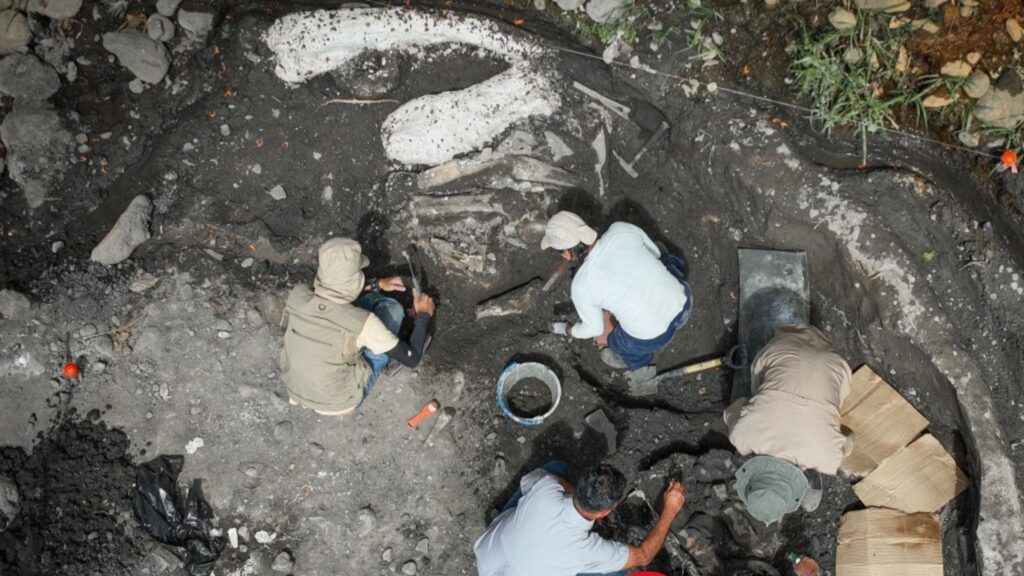
A six-year-old boy took part in the discovery of fossil remains of a giant sloth in the Orosi Valley, in the canton of Paraíso in Cartago, as confirmed by the National Museum of Costa Rica.
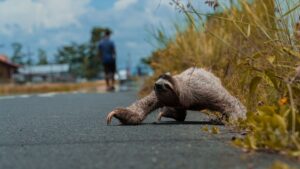
The discovery took place on a private property in the area, where several large bones were identified and later analyzed by specialists. Among the remains are pieces corresponding to a giant sloth, a species of megafauna that inhabited Costa Rican territory thousands of years ago.
The initial identification was carried out by geologist María Sequeira Castro, who detected the presence of the remains and notified the relevant authorities. Following the report, technical staff from the National Museum traveled to the site to conduct the inspection and the proper recovery of the pieces.
The child was present at the time of the discovery, a situation that has drawn attention as it is an unusual event linking new generations with the country’s paleontological heritage.
Preliminary studies indicate that the remains belong to a giant sloth that would have inhabited the region during the Pleistocene period, approximately between 10,000 and 40,000 years ago. At that time, Costa Rican territory was home to large species such as mastodons, glyptodonts, and other large-scale mammals.
This discovery adds to other recent findings in the province of Cartago, which have helped expand knowledge about the prehistoric fauna that inhabited the country and provide relevant information for scientific research.
The recovered pieces will undergo detailed studies by specialists from the National Museum in order to more precisely determine the species, age, and conditions under which the remains were preserved.
Authorities indicated that this type of discovery reinforces the importance of reporting any possible paleontological evidence for its proper protection and analysis, as these remains form part of Costa Rica’s natural and historical heritage.