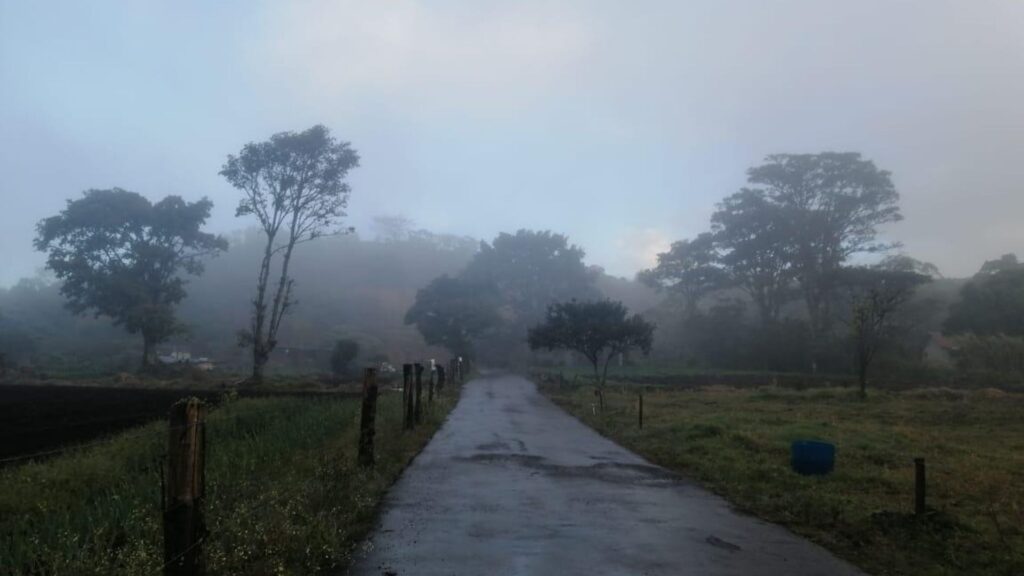
Since last December, residents of Costa Rica have experienced a noticeable drop in temperatures during the early hours of the day and at nightfall. According to recent projections, this “icy cold” condition will not be temporary, as current weather patterns are expected to remain in place until early March, according to the analysis of geologist Allan Astorga, a specialist at the University of Costa Rica (UCR).
The origin of this phenomenon lies in the descent of freezing air masses from the North Pole, which manage to move into the Central American region. Although the thermal sensation may be pleasant for some sectors of the population, experts warn that this meteorological behavior is a clear manifestation of the effects of global warming. Paradoxically, the increase in the planet’s average temperature generates climatic instability that alters air circulation patterns, enabling cold currents to reach tropical latitudes with greater frequency and intensity.
The severity of the weather is already evident in the country’s highlands. In areas such as the Irazú Volcano, frost has been reported due to extreme temperatures. Likewise, meteorological authorities have anticipated that this scenario will be accompanied by strong wind gusts that could reach speeds between 80 and 90 kilometers per hour, increasing the wind chill and posing a potential risk to infrastructure and vegetation.
Finally, specialists are urging the population to take the necessary protective measures and adapt to these conditions, which have become more erratic in recent years. Beyond the need to dress warmly, the phenomenon serves as a reminder of the direct impact that human activity and environmental degradation are having on the natural climate cycles of the region.