San José, Costa Rica — In a decision that sets a historic precedent for Costa Rican democracy, the Supreme Electoral Tribunal (TSE) confirmed this week that the European Union (EU) will deploy an Election Observation Mission (EOM) for the general elections scheduled for February 1, 2026.
Official Confirmation and Protocol
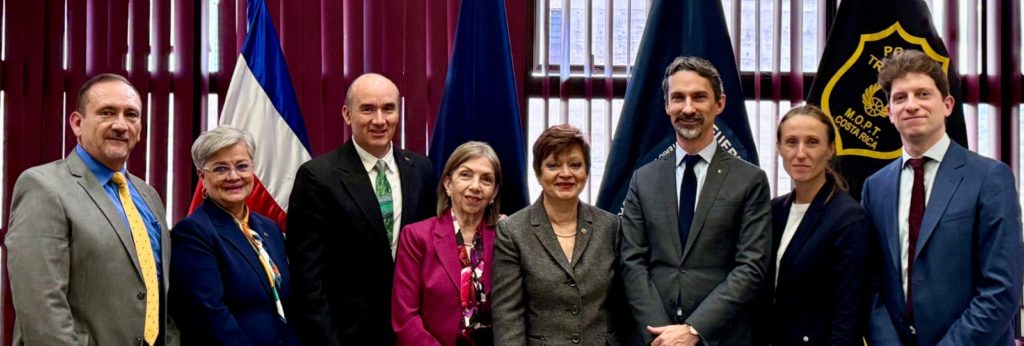
The agreement was formalized on November 26, 2025. During a high-level meeting at the TSE headquarters, a European diplomatic delegation led by Ambassador Pierre-Louis Lempereur delivered the official letter accepting the invitation extended by the Costa Rican electoral body.
The meeting, which also included Deputy Ambassador Galina Karamalakova and diplomat Raphael Warolin, established the framework for what will be the first time in the country’s history that European Union observers officially accompany a national electoral process.
The Mission’s Technical Role
The observers are scheduled to arrive in January 2026, weeks prior to election day. According to the TSE, this will not be a merely ceremonial visit. The team of experts has a specific technical mandate that includes:
- Thematic Analysis: Evaluating specific areas of the electoral system and logistics.
- Democratic Standards: Assessing the performance of the process against international conventions and democratic standards subscribed to by Costa Rica.
- Final Report: Following the elections, the mission will issue a document detailing their findings and providing specific recommendations to strengthen future processes.
The 2026 Electoral Landscape
The European mission arrives at a pivotal moment to oversee the general elections that will define the country’s political direction for the 2026-2030 term. Voters will head to the polls to elect:
- The President and two Vice Presidents of the Republic.
- The 57 deputies who make up the Legislative Assembly.
Institutional Reaction
The Supreme Electoral Tribunal has welcomed this partnership. Electoral authorities emphasized that the presence of these experts will not only “contribute to the Costa Rican democratic process” but also serve to strengthen cooperation ties between the Central American nation and the European continent.
With this step, Costa Rica opens itself to the technical scrutiny of one of the world’s most demanding bodies regarding electoral transparency, reaffirming confidence in the solidity of its institutions.