Costa Rica’s surfing community has said goodbye to one of its most beloved characters. Thai, a dog who spent years accompanying surf coach Diego Jiménez, recently passed away, leaving behind a story that goes far beyond the waves.
For hundreds of students and tourists, Thai was more than the mascot of a surf school. He was part of the experience: welcoming people arriving at the beach for the first time, staying close to students during lessons, and watching from the shore as they attempted to catch their first waves.
His calm and friendly presence eventually made him a familiar figure within the local surfing community.
A Familiar Companion During Surf Lessons
Thai spent much of his life alongside Diego Jiménez and his surf school.
While instructors taught students how to balance on a board, read the waves, and gain confidence in the water, Thai would remain nearby on the beach.
According to his companion, the dog had a special ability to approach people who were nervous about their first lessons.
Over time, many students came to associate their first surfing memories with Thai’s presence on the sand.
This connection turned the dog into a small but meaningful part of the experience offered by Costa Rica’s beaches to both tourists and sports enthusiasts.
A Farewell by the Sea
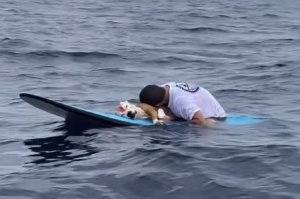
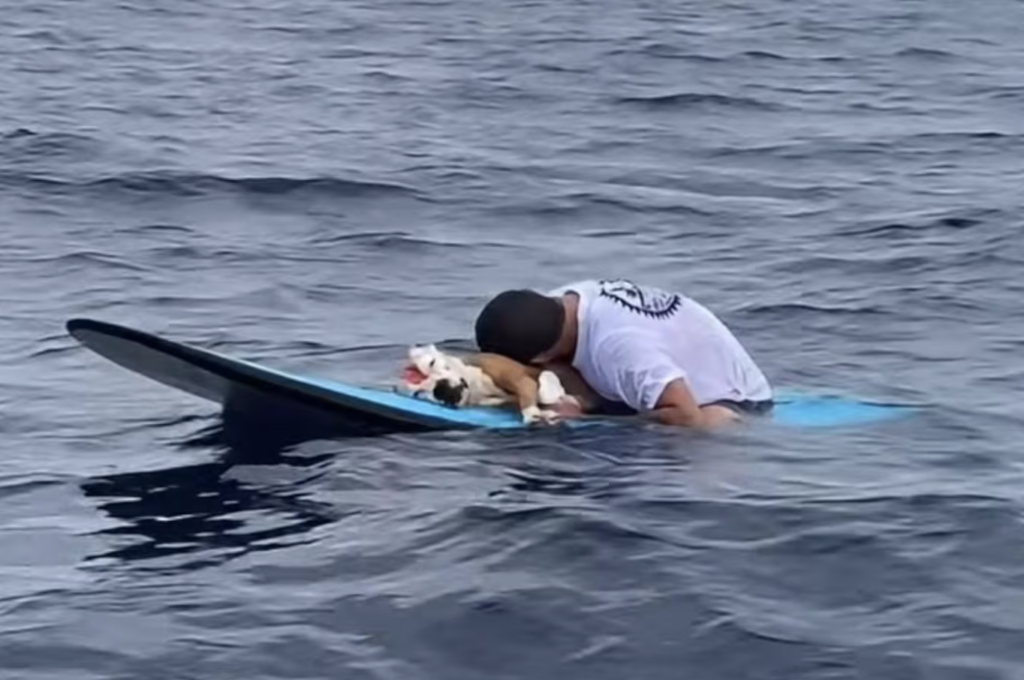
Following his death, Diego Jiménez shared images of Thai’s final tribute.
Family members, friends, and people from the surfing community gathered by the sea to say goodbye, in a moment that was later shared on social media and generated numerous reactions.
The tribute reflected the bond Thai had created with the people who had known him over the years.
Jiménez’s post particularly highlighted the role the dog had played with beginners and in the daily life of the surf school.
More Than a Pet
Thai’s story also shows how animals can become part of the communities that grow around particular places.
In surfing communities, dogs often become part of everyday beach life: accompanying their families, spending time near surf schools, and interacting with residents and visitors.
In Thai’s case, that presence took on a special meaning.
His calm behavior and closeness to students meant that many people remembered him even after their surf lessons had ended.
For those who learned to surf alongside him, Thai became associated with discovery, the ocean, and those first moments standing on a board.
The Connection Between Surfing and Coastal Communities
Surfing plays an important role in the identity of many coastal communities in Costa Rica.
Beyond being a sport, surf schools, instructors, businesses, and families connected to the ocean form social networks that contribute to the economic and cultural life of many towns.
The Costa Rican Institute of Sport and Recreation, together with other institutions and organizations, has worked on initiatives linking surfing with marine and coastal ecosystem conservation and community development.
In 2025, ICODER participated in the first National Surf Ecosystems Forum, an initiative aimed at promoting management models that connect coastal ecosystems with communities and people who practice the sport.
Thai’s story fits, from a more everyday perspective, into this same world: surfing does not only happen in the water. It also creates relationships and memories around the beaches.
Animal Welfare Is Also Part of Responsible Coexistence
The presence of animals in tourist and sporting environments also highlights the importance of responsible coexistence.
In Costa Rica, the National Animal Health Service (SENASA), part of the Ministry of Agriculture and Livestock, runs a National Animal Welfare Program aimed, among other things, at promoting animal welfare and responsible pet ownership.
The well-being of companion animals involves providing adequate food, veterinary care, protection, and safety.
In coastal areas, where pets may be exposed to heat, salt water, strong currents, or large numbers of people, these considerations become particularly important.
Thai’s story can also serve as a reminder of the responsibility involved in sharing public and natural spaces with animals.
A Legacy That Will Continue in Every Surf Lesson
Following Thai’s death, Diego Jiménez encouraged those who knew him to keep his spirit alive.
His message was simple: continue enjoying surfing and remember that every new lesson will carry a small part of Thai’s story.
It is a way of turning a farewell into a lasting memory.
For some, Thai will be remembered as the dog waiting on the sand. For others, he will be the companion who helped make a first experience in the ocean feel less intimidating.
And for the community that watched him grow alongside surfboards, waves, and students, he will remain part of the history of a beach and a surf school.
A Small Story That Touched Many People
The stories that shape a place’s identity are not always major events.
Sometimes they are the people we meet, the animals we see every day, or the small characters who gradually become part of our memories.
Thai became one of those characters.
His story reflects one of the most special characteristics of coastal communities: their ability to create connections around the ocean, sport, and everyday life.
Although he will no longer be waiting for students on the beach, his memory will remain connected to the waves and to the people who learned to enjoy them alongside him.
Sources
La Teja: information about Thai’s death, his relationship with surf coach Diego Jiménez, and the tribute held at sea.
Costa Rican Institute of Sport and Recreation (ICODER): information about the National Surf Ecosystems Forum and the relationship between surfing, marine conservation, and coastal communities.
National Animal Health Service (SENASA): official information on animal welfare and responsible companion-animal ownership.