

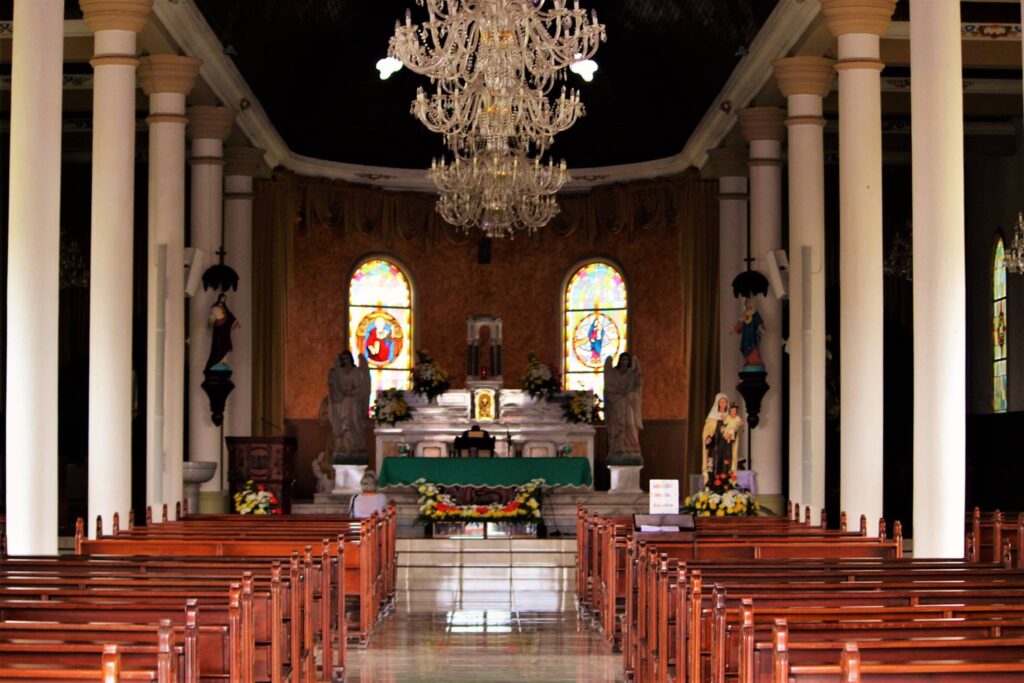
I. The Duality of Holy Week: An Encounter Between Two Worlds
In Costa Rica, Holy Week is not simply a date on the liturgical calendar; it is a cultural phenomenon where solemn contemplation collides head-on with the exuberance of high summer. For 2026, the celebration falls within a privileged window of time: from March 29 (Palm Sunday) to April 5 (Easter Sunday). It is the heart of the dry season, a moment when the sky reaches its deepest blue and the warm air from both the Pacific and the Caribbean invites rest, while church bells call the faithful to reflection.
For the visitor, this week offers a fascinating duality. On one hand, the cities of the Central Valley — San José, Cartago, and Heredia — are transformed into stages for a centuries-old sacred theater, with streets carpeted in flowers and processions advancing to the rhythm of funeral marches that send shivers down the spine. On the other hand, the coastlines prepare for the “exodus”: the mass movement of families seeking the sea as a sanctuary for leisure and enjoyment.
Experiencing Holy Week in Costa Rica in 2026 requires understanding this binary rhythm. This is a country that stops to pray, but also celebrates life under the shade of a palm tree. Whether you seek the mysticism of live passion plays in San Joaquín de Flores or the natural refuge of the volcanoes, this guide will lead you through the delicate balance between ancestral tradition and the “Pura Vida” spirit that defines this Central American nation.
II. Chronicle of a Heritage: History, Mysticism, and the Echo of the Ancestors
Holy Week in Costa Rica is a tapestry woven with threads of the Spanish colonial era and fibers of local folklore. Historically, the country did not merely slow down — it submerged itself in an almost sepulchral silence. Costa Rican grandparents still recount with nostalgia and a touch of mischief the days when “Holy Week” was governed by mystical prohibitions: one could not run because it would “hurt the Lord,” knives were forbidden for fear of cutting the body of Christ, and there was a genuine dread that bathing in a river on Good Friday might cause you to emerge with scales and a fish’s tail.
From Silence to Public Art
Although those superstitions have today given way to a more relaxed, holiday atmosphere, the processional mysticism remains the backbone of the week. Costa Rica possesses one of the richest traditions of religious imagery (religious sculptures) in all of Central America. Many of the figures of Jesús Nazareno and the Virgen Dolorosa you will see parading in 2026 are polychrome wooden pieces from the 19th century, brought from imagery workshops in Guatemala or Spain, or carved by Creole hands that imprinted upon them the sorrow and hope of the people.
The Ritual of the Brotherhoods
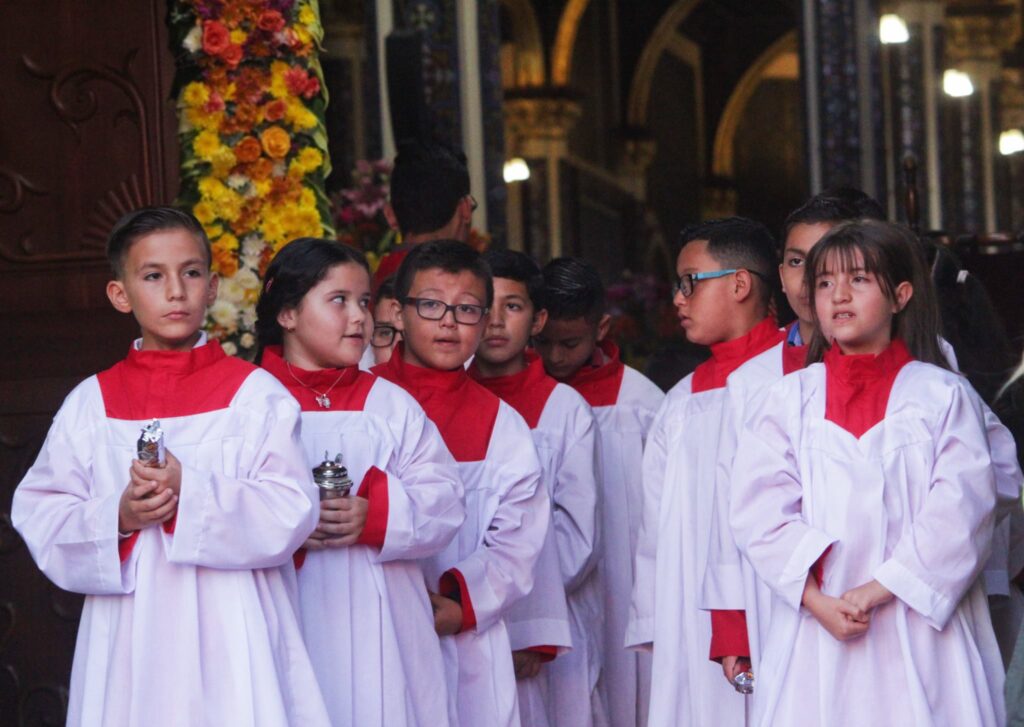
The soul of this historical tradition lies in the Brotherhoods of Jesús Nazareno. You will see men and women dressed in purple and white tunics, bearing on their shoulders heavy “andas” (wooden platforms). This act is not merely religious — it is a display of community pride. In places like downtown San José, the solemnity is such that the air grows thick with the scent of incense and the sound of symphonic bands performing funeral marches composed more than a hundred years ago by Costa Rican musicians.
The Face of the Passion in 2026
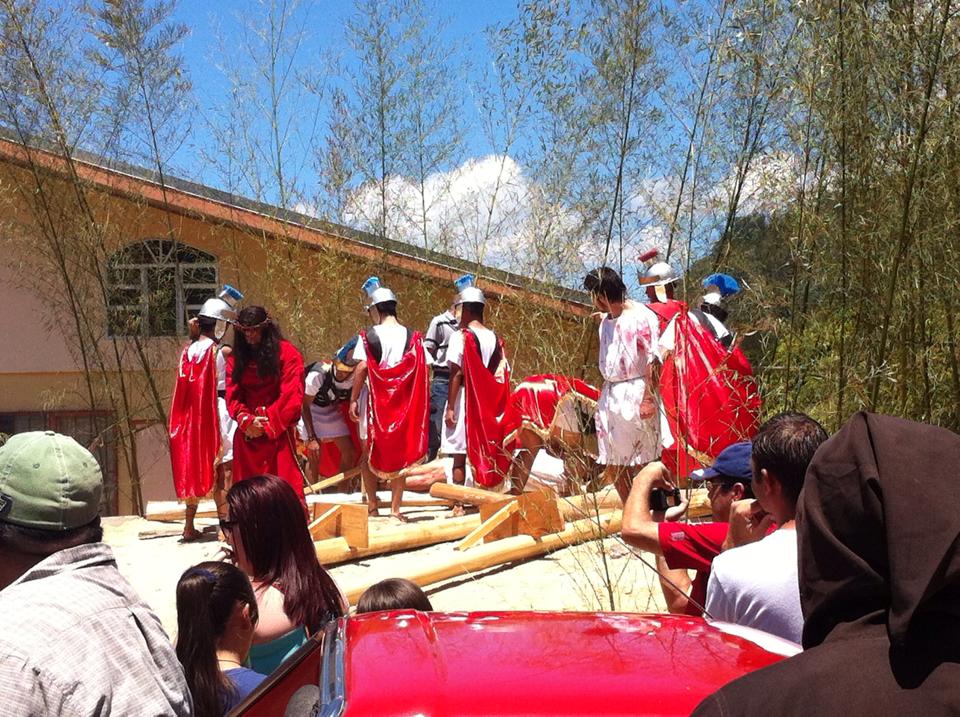
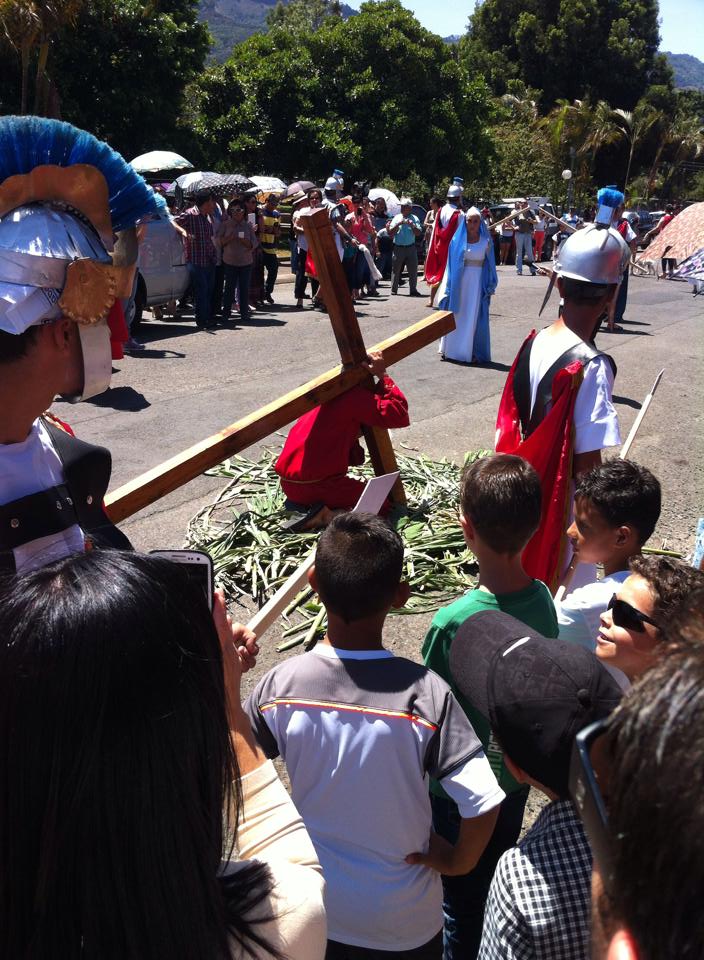
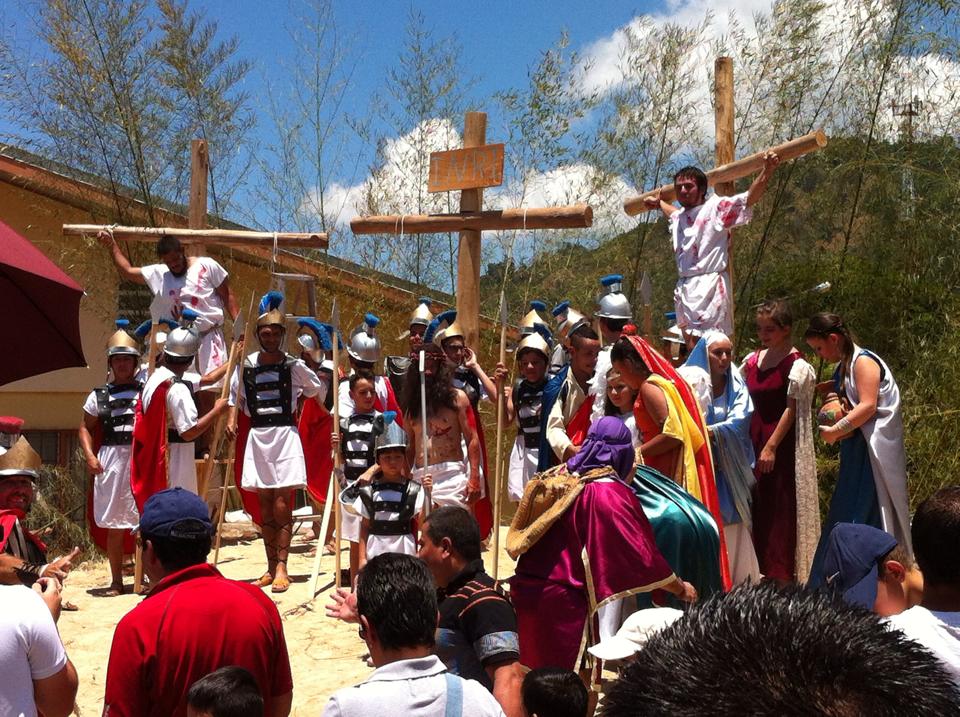
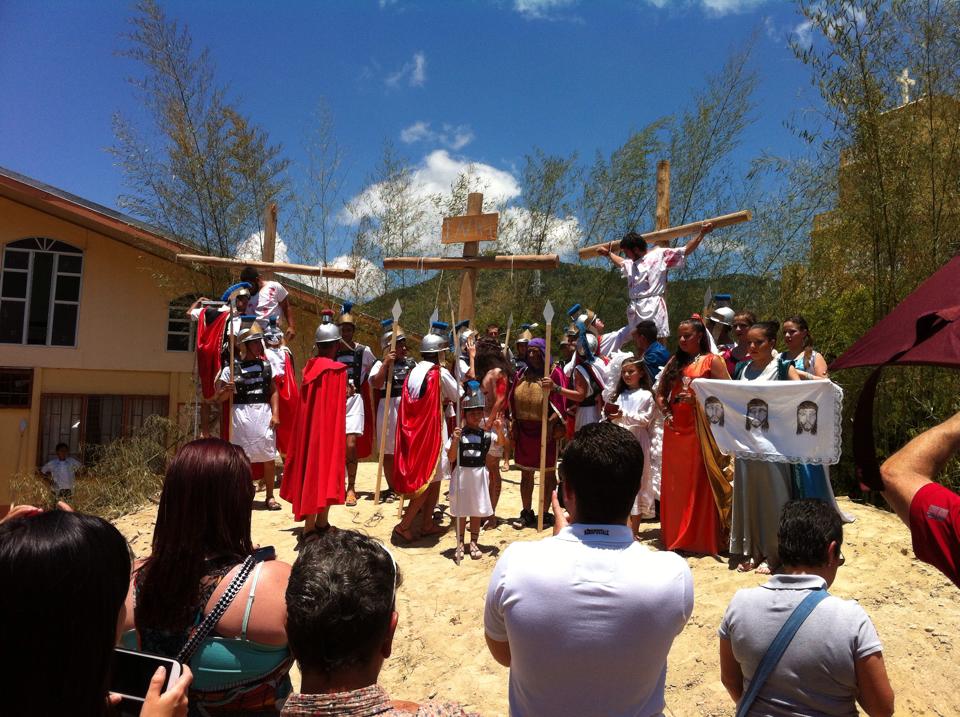
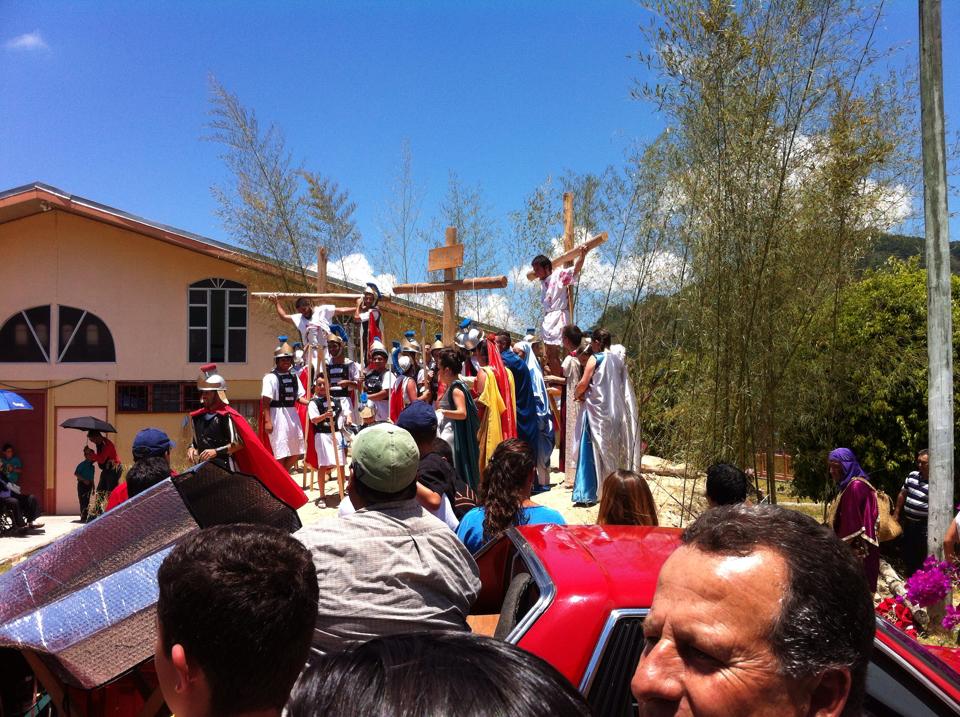
For those who seek “living” history, the recommendation is to head to San Joaquín de Flores. There, tradition spills out of the churches and into the streets with popular theater performances in which local residents portray Romans, apostles, and Christ himself. Months of preparation go into costumes and staging, and the realism is awe-inspiring, drawing thousands of visitors each year. The mysticism here has resisted modernity, reminding us that beyond the beaches, the heart of Costa Rica beats with an ancestral force that manifests with special intensity under the March sun.
III. The Map of Fervor: Where to Live the Experience in 2026
If you find yourself in Costa Rica between March 29 and April 5, 2026, you will notice that the country divides into two geographies: that of faith in the Central Valley and that of rest on the coasts. For those seeking the cultural essence, these are the cardinal points that must not be missing from your itinerary:
1. San José: The Theater of Solemnity
The usually chaotic capital transforms into an oasis of peace. Good Friday (April 3) is the most important day. The Procession of the Holy Burial, which departs from the Metropolitan Cathedral, is a display of absolute respect. Streets are closed to vehicle traffic, and the silence is broken only by the sound of the staffs of the Knights of the Holy Sepulchre striking the pavement. It is the ideal moment for lovers of urban photography and sacred art.
2. Cartago: Tradition in the City of Mists
In the former capital, the Basilica of Our Lady of the Angels becomes the epicenter. Here, Holy Week carries a more stately character. Cartago’s processions are famous for their order and for the beauty of their “pasos” (scenes from the Passion). Walking around the Basilica on Holy Thursday (April 2), visiting the decorated “Sagrarios” (monuments) in different churches, is one of the most cherished traditions among Costa Ricans.
3. San Joaquín de Flores: The Passion Performed Live
Just 15 minutes from the international airport, this small town in Heredia offers the most immersive experience. These are not mere statues — it is the townspeople themselves who, wearing period costumes and after months of preparation, reenact the trial, the flagellation, and the crucifixion. The realism is breathtaking and draws thousands of visitors every year. Tip for 2026: Arrive early (before 9:00 a.m. on Good Friday) to secure a good spot in the central square.
4. The Colonial Church Route
For a more leisurely journey, the Nicoya area in Guanacaste and Orosí in Cartago are home to some of the oldest temples in the country. Visiting the Church of San Blas de Nicoya on Palm Sunday is to witness a unique syncretism between the Chorotega heritage and Catholic faith, with the blessing of artisanally woven palm leaves that are true works of art.
IV. A Lenten Feast: The Taste of Chiverre and the Sea
If there is something that defines the aroma of Costa Rican homes during Holy Week, it is the sweet perfume of syrup and the brine of fish. Since Catholic tradition calls for abstaining from red meat, the culinary creativity of the “tico” has flourished in recipes seen only at this time of year.
The King of the Season: Chiverre
Chiverre is a type of giant gourd with an extremely hard shell and fibrous pulp, which becomes the undisputed star of the season. Its preparation is almost a social event: it must be broken open (traditionally with a mallet), its fiber dried in the sun, and then cooked for hours with raw brown sugar (panela), cinnamon, cloves, and fig leaves.
- Miel de Chiverre: The result is a dark, fibrous preserve eaten on its own or as a filling for the famous “empanaditas de chiverre” — small turnovers made with a wheat flour dough that melts in the mouth.
Flavors of Land and Sea
With red meat off the table, the menu diversifies with local ingredients:
- Flor de Itabo: This white flower, a symbol of rural identity, has a very distinctive bitter flavor. It is typically prepared as a hash with egg or with pieces of potato. It is the taste of Lent in the countryside.
- Arroz con Palmito: A creamy, comforting, and elegant dish that often accompanies Holy Thursday dinners.
- Dried Fish: Salt cod or dried, salted bolillo fish is rehydrated to create hearty soups or the classic arroz con pescado (rice with fish). It is the aroma that floods the central markets of San José and Alajuela in the days beforehand.
“Tamales Mudos” and Homemade Bread
Unlike the Christmas tamales, those made for Holy Week are “mute” because they contain no meat. They are pure masa tamales, sometimes filled with mashed black beans, ideal to bring as a snack if you plan to spend many hours following a procession or traveling to the coast. Homemade bread, baked in clay ovens in rural areas, completes this culinary picture, one that seeks to nourish the body while feeding the spirit.
V. Logistics Survival Guide: 2026 in Real Time
Getting around Costa Rica during Holy Week requires the precision of a watchmaker. The country experiences one of the largest internal migration movements of the year. If you plan to travel, take note of these critical points:
1. The Calendar of Closures and Holidays
In 2026, Holy Thursday (April 2) and Good Friday (April 3) are mandatory paid public holidays.
- Commerce: Good Friday sees an almost total shutdown. Large supermarkets and pharmacies usually open, but small businesses and public offices come to a complete halt.
- Banks: Most close from Wednesday at midday until the following Monday. Make sure you have cash or handle any banking matters before Tuesday, March 31!
2. The “Exodus” and Traffic
Holy Wednesday is the critical day. Thousands of San José residents abandon the Central Valley heading for the coasts.
- Route 27 (toward the Pacific): This road tends to become saturated. The government typically applies “reversibility” (all lanes running in one direction) at specific times to ease the outflow and return flow.
- Public Transport: Buses to tourist destinations (such as Manuel Antonio, Tamarindo, or Puerto Viejo) fill up weeks in advance. If you don’t already have a ticket for 2026 at this point, look for private transportation alternatives or travel in the early morning hours.
3. The Famous “Dry Law”
Although a legal reform allows each municipality to decide whether or not to prohibit the sale of alcohol, there are still rural and traditional cantons that maintain the Dry Law on Holy Thursday and Good Friday.
- Advice: If you are staying in an area outside the major tourist centers, it is best to stock up on beverages before Thursday to avoid the surprise of sealed shelves in the local convenience store.
4. Safety and the Sun
We are at the peak of the dry season. The March sun in Costa Rica shows no mercy:
- Radiation: Use high-factor sunscreen, especially if you plan to walk in midday processions or spend time at the beach.
- Riptide Currents: With so many people on the beaches, Red Cross authorities reinforce their surveillance. Always respect the warning flags at sea.
VI. Recommended Destinations: Where to Be According to Your Travel Style
For this 2026, your choice of destination will determine the type of Holy Week you experience. Costa Rica offers three “microclimates” of experience:
- For the culture seeker (Central Valley): If you prefer urban calm, stay in San José or Heredia. The cities empty of vehicles, the air is cleaner, and you can walk among historic temples enjoying the architecture and sacred music without the usual year-round crowds.
- For the sun lover (Guanacaste and the Central Pacific): If you are seeking the energy of summer, Tamarindo, Santa Teresa, or Manuel Antonio are the epicenters. Be prepared, however, for a vibrant atmosphere, music, and crowded beaches. This is the moment when the concept of “tropical festivity” reaches its fullest expression.
- For the natural retreat (Northern Zone and Caribbean): Places like La Fortuna (Arenal Volcano) or Puerto Viejo in Limón offer a balanced experience. The Caribbean, in particular, maintains a more relaxed pace and a cuisine based on coconut and fish that gives a delightful twist to traditional Lenten fare.
The Essence of “Pura Vida” in Its Most Sacred Moment
Holy Week 2026 in Costa Rica is not just a pause from daily labor — it is the mirror of a nation that refuses to forget its roots while enthusiastically embracing its modern, tourist-friendly present. It is a week where the scent of incense from a 200-year-old cathedral mingles, just a few kilometers away, with the salty breeze of an untouched coastline.
Whether you find yourself kneeling before a monument in Cartago, savoring a chiverre empanada at a rural fair, or watching the sunset over the Pacific waves, you will be participating in a collective ritual of renewal. Costa Rica invites the traveler not merely to observe, but to immerse themselves in this dualism.
In the end, Holy Week in this land reminds us that the “Pura Vida” spirit also holds space for reflection, family, and respect for the sacred. In this 2026, we invite you to let yourself be carried by the slow rhythm of the holy days and to discover that, in the heart of Central America, faith and the joy of the sun are two sides of the same coin.