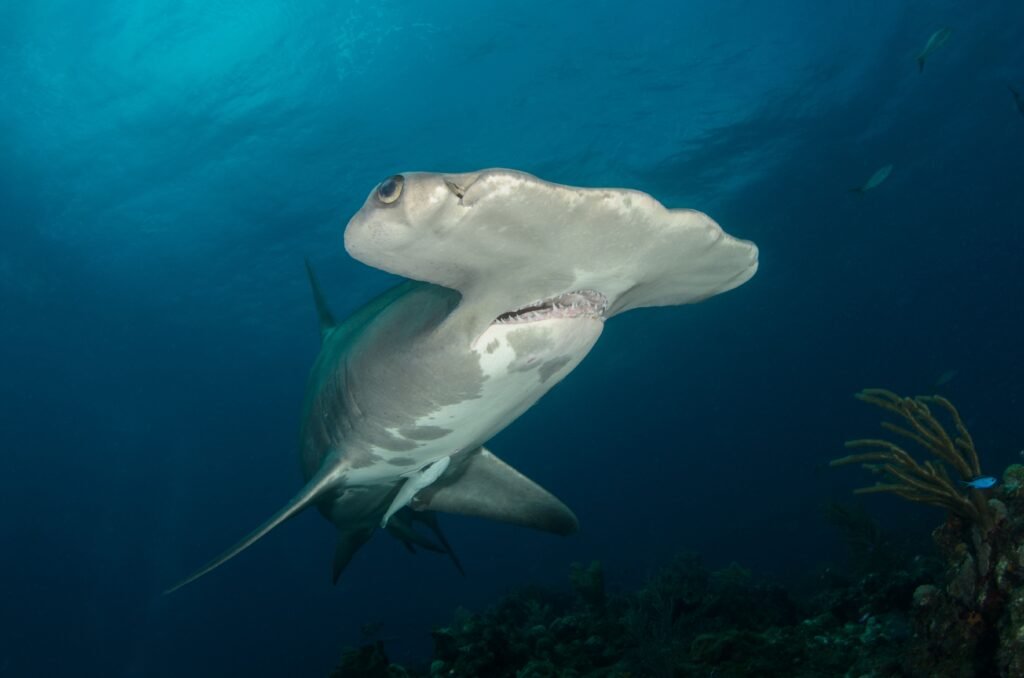
A shark in the waters of Caño Island, marine life at Cocos Island and a baby tapir walking in front of a group of tourists in Corcovado National Park. These three scenes, shared by Teletica on November 17, draw attention back to three of the country’s most valuable protected areas, each with its own conservation story.
Corcovado, the tapir’s great refuge
Spotting a baby tapir (Tapirus bairdii) is no small thing. The species is listed as endangered by the International Union for Conservation of Nature (IUCN). Its range stretches from southern Mexico to Colombia and Ecuador, but it has disappeared from parts of its former territory. The available estimates, dating from 2006, put the wild population at fewer than 5,500 animals, more than a thousand of them in Costa Rica.
The threats are well known: habitat loss and fragmentation, hunting and diseases spread by domestic animals. On top of that, the species has a low reproductive rate, so every birth counts for the population.
Corcovado National Park, created in 1975 on the Osa Peninsula, protects 41,789 hectares, regarded as the largest remaining tract of lowland rainforest on Central America’s Pacific coast. A study published in 2016 in the journal Cuadernos de Investigación UNED describes an abundant tapir population in parts of the park and highlights the animals’ role as seed dispersers, key to forest regeneration. An estimate from the 1990s put the number of tapirs inside Corcovado at between 155 and 249.
Caño Island, a resting place for sharks
Off the Osa coast, Caño Island Biological Reserve was created by Law 6215 on March 9, 1978. It protects 320 hectares of land and 5,800 hectares of sea, is home to 158 plant species and serves as a breeding ground for humpback whales from both hemispheres.
Its waters are also especially important for sharks. In 2023, the IUCN Shark Specialist Group named it an Important Shark and Ray Area, mainly because of the whitetip reef shark, a species classed as vulnerable. These sharks rest in groups at a site known as Bajo del Diablo, mostly during the dry season. The IUCN factsheet also mentions the leopard round ray, as well as sightings of whale sharks and manta rays.
Cocos Island, the distant sanctuary
More than 500 kilometers offshore, Cocos Island National Park has been a UNESCO World Heritage Site since 1997. Of its 202,100 hectares, only 2,400 are on land and 199,700 are marine. UNESCO highlights the presence of the endangered scalloped hammerhead shark and of the whitetip reef shark.
That richness also faces pressure. In October, Teletica aired footage of diver Luis Fallas helping a hammerhead that was dragging several meters of fishing line, a reminder that even the best-protected areas are not safe. On another dive at the island, divers spotted orcas.
Corcovado was created in 1975, Caño in 1978, and Cocos joined UNESCO’s list in 1997. Nearly five decades after the first of these designations, the sightings arrive just as the high season begins, and show what each of these areas protects.
Sources
- Teletica – articles from October 19 and November 17, 2026
- Sinac (ACOSA) – official page of Caño Island Biological Reserve; UNESCO – Cocos Island National Park listing
- IUCN SSC Shark Specialist Group – Caño Island ISRA Factsheet (2023)
- San Diego Zoo Wildlife Alliance and EDGE of Existence – Baird’s tapir factsheets; Foerster and Vaughan, Cuadernos de Investigación UNED (2016)