Boosting STEM Education in the Classroom
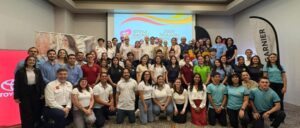
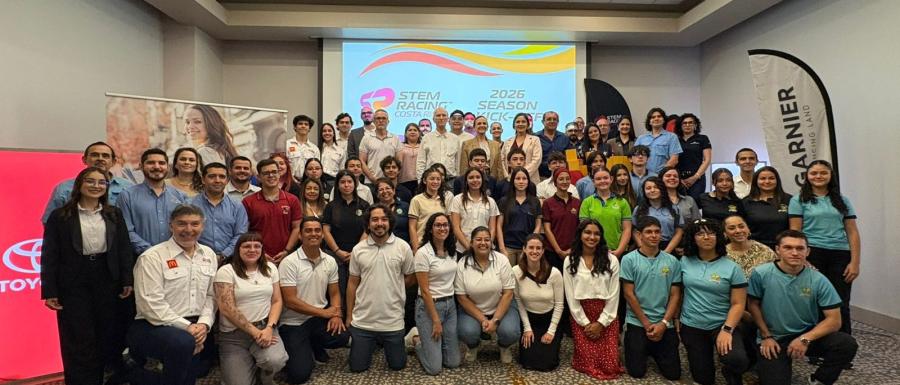
The Ministry of Public Education (MEP) announced the strengthening of STEM education in Costa Rica through the STEM Racing Costa Rica programme, an initiative inspired by Formula 1 that aims to bring students closer to scientific and technological careers. The project is part of the MEP’s efforts to modernise the teaching of science, technology, engineering and mathematics through hands-on, competitive experiences linked to the productive sector.
A Programme Inspired by Formula 1
STEM Racing Costa Rica draws on the international Formula 1 in Schools competition model, in which students design and build miniature cars powered by compressed air. This methodology allows for the integration of content covering physics, design, aerodynamics, programming, teamwork and project management, within an active and engaging learning environment. According to information from the MEP and the organisers, the goal is for students to “learn by doing” and to see STEM fields as real options for their academic and professional futures.
National Reach and Participating Schools
Since its arrival in the country in 2023, the STEM Racing Costa Rica programme has reached more than 14,000 students through competitions, educational field trips and training activities in both public and private schools. For the 2026 season, the MEP announced that 84 schools and more than 500 students from six regions will participate: Central, Chorotega, Central Pacific, Brunca, Huetar Caribbean and Huetar North. This distribution aims to ensure that the programme has nationwide coverage and does not remain concentrated solely in the Greater Metropolitan Area.
Investment to Nurture Young Talent
According to official data, since its implementation in Costa Rica, STEM Racing has represented an investment of close to 300,000 dollars in technological tools, educational materials, specialised training and academic opportunities. For the 2026 cycle, an additional investment of approximately 145,000 dollars is projected to cover travel, certifications, specialised courses, competition materials and access to educational platforms. Unlike other countries where this type of competition takes place, participation for Costa Rican students is completely free of charge, which broadens access to high-level science and technology experiences.
Competitions and Hands-On Experiences for Students
The programme is structured around competitive seasons in which student teams must design, build and test their miniature cars to race on 20-to-25-metre tracks, simulating Formula 1 races. In addition to the races, teams present engineering portfolios, develop brand identities and showcase their projects before judges, which promotes communication skills, leadership and critical thinking. In previous seasons, such as the 2025 season, around 155 teams and more than 900 students from different regions of the country took part.
Partnership Between the MEP and the Private Sector
The programme is implemented through an agreement between the Ministry of Public Education and the Foundation for the Economic Reactivation of Micro, Small and Medium Enterprises, via the Centre for Thought, Action and Innovation (EPICENTRO). This agreement makes it possible to include students from Professional Technical Colleges (CTP), Professional Community Education Institutes (IPEC) and Integrated Adult Education Centres (CINDEA) across the country. The MEP has noted that partnerships of this kind are key to connecting secondary and technical education with the needs of the labour market and emerging productive sectors.
Developing Skills for the Future
In addition to strengthening technical competencies in STEM areas, the programme promotes soft skills such as leadership, teamwork, problem-solving and critical thinking. From the MEP’s perspective, these capabilities are essential to preparing students for a working world increasingly based on innovation and technology. Programme spokespersons have highlighted that the true objective is not simply to build miniature cars, but to train professionals with a global outlook and the ability to integrate into technological ecosystems such as the semiconductor sector that Costa Rica is currently developing.
International Projection and Medium-Term Vision
For upcoming cycles, Costa Rican teams are expected to represent the country in international competitions such as STEM Racing Spain, expanding Costa Rica’s presence on this global educational platform. The programme’s five-year vision includes extending coverage to more schools, strengthening links with technical education and building bridges between classrooms and the needs of the productive sector. In this way, Costa Rica is investing in a STEM education model that combines high academic standards, innovation and real learning experiences for young people.