Thousands of Costa Ricans and tourists had their travel plans abruptly interrupted this Wednesday, September 24, when an unprecedented technical failure forced authorities to completely close the country’s airspace. If you had a flight scheduled or were waiting for someone, here are the details of a chaotic morning that paralyzed the skies over Costa Rica.
An Unexpected Early Morning Failure
It all began in the early hours of Wednesday morning. The General Directorate of Civil Aviation (DGAC) issued an alert after detecting a critical failure in the primary radar system—the technological heart that allows air traffic controllers to safely monitor and guide aircraft.
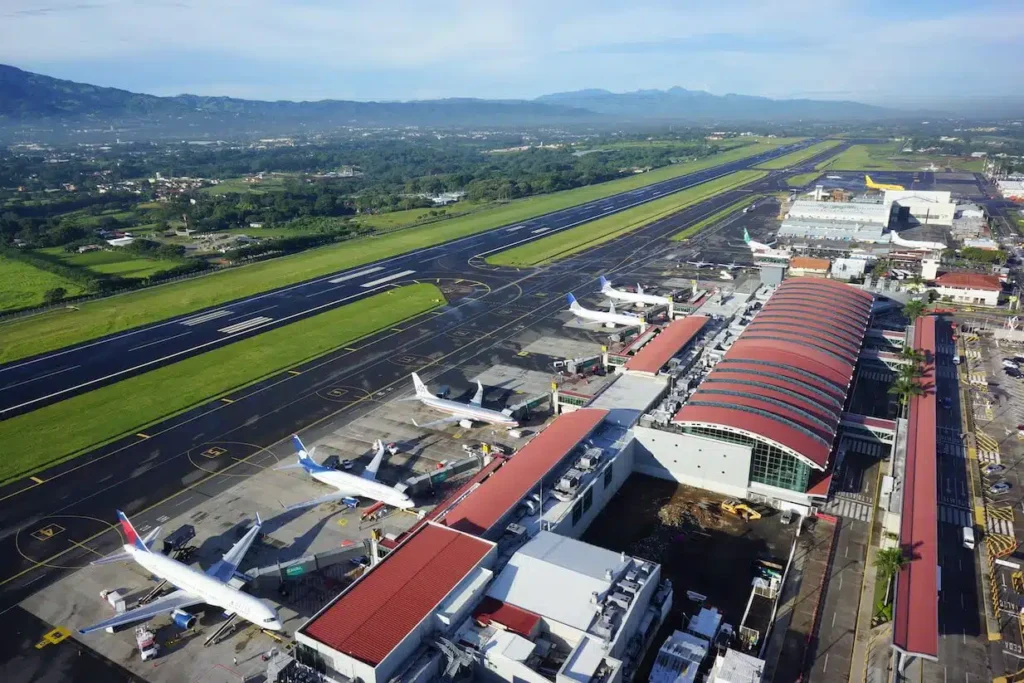
For security reasons, the drastic decision was made to suspend all arrival and departure operations at the country’s two main international airports: Juan Santamaría (SJO) in Alajuela and Daniel Oduber Quirós (LIR) in Liberia. This meant that no plane could take off from or land on Costa Rican soil.
The Human Impact: Stranded Travelers and Uncertainty
For the people on the ground, the impact was immediate and stressful. The airport terminals, which were just beginning to fill up at that hour, turned into a sea of confusion. Hundreds of passengers, with luggage in hand and excited for a vacation or a business trip, were met with the news that their flights were canceled or indefinitely delayed.
Flights already en route to Costa Rica were diverted to neighboring countries like Panama and El Salvador, leaving families waiting in arrival halls without knowing what was happening. Lines in front of airline counters grew quickly as travelers desperately sought answers or a solution.
“We had been planning this family trip for months. We got to the airport at 4 a.m., and everything was chaotic. No one could tell us what was going on,” an affected passenger at Juan Santamaría told a local media outlet.
The Resolution and Return to Normalcy
After hours of intense work by technical teams, the fault was identified and resolved. According to preliminary reports, it was caused by an electrical issue in the radar system.
Around 10 a.m., the DGAC confirmed that the system was operational again and it was safe to resume flights. Slowly, the airspace reopened, and operations began to normalize. However, the ripple effect of cancellations and rescheduling will likely be felt for several days.
Authorities have launched an investigation to clarify the exact causes of the failure and to ensure it does not happen again. This event serves as an important lesson about the vulnerability of our critical infrastructure and reminds us of the crucial, though often invisible, work of those who keep our skies safe.