Time Magazine Turns Its Eyes to the Camino de Costa Rica
The renowned American magazine Time recently included El Camino de Costa Rica in its “World’s Greatest Places 2026” list, highlighting it as one of the most compelling hiking routes in the world this year. In its review, Time notes that this coast-to-coast trail crosses rivers, cloud-covered mountains and dense tropical jungles across 16 stages, offering a deep immersion into rural Costa Rica that most traditional visitors never get to experience. For travellers seeking more than sun and beaches, this recognition firmly establishes the Camino as an ideal option for nature, adventure and cultural tourism.
What Is the Camino de Costa Rica?
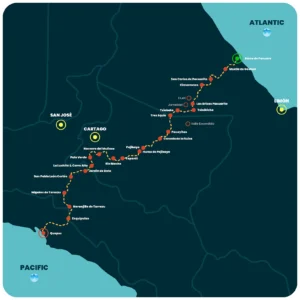
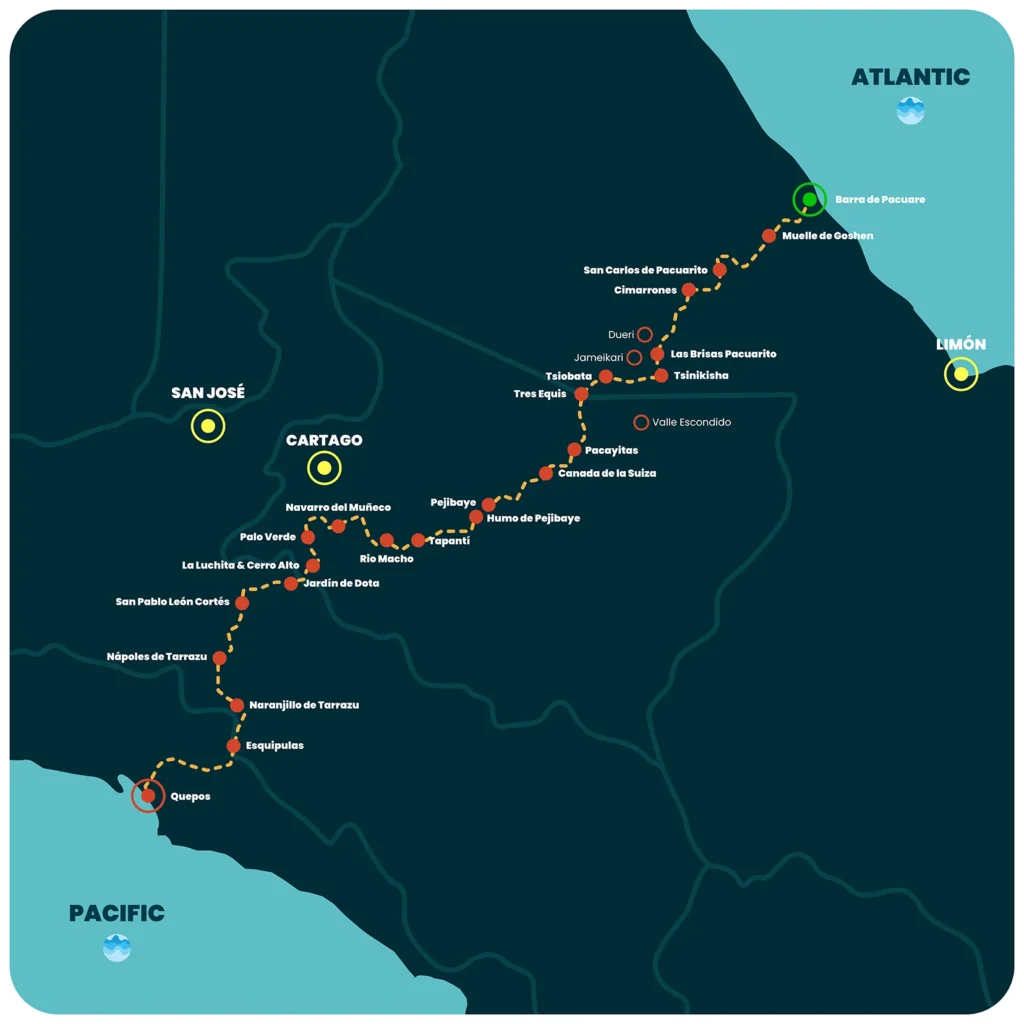
The Camino de Costa Rica is an approximately 280-kilometre hiking route that crosses the country from east to west, from the Caribbean coast to the Pacific Ocean. Inspired by the famous Camino de Santiago, the trail can be completed in around fifteen to sixteen days, following consecutive stages that connect rural communities, indigenous territories, agricultural valleys and mountain areas. The route begins on the Atlantic coast, in villages such as Parismina or Barra del Pacuare, and ends in the Quepos region on the Central Pacific coast, literally allowing hikers to walk “from sea to sea.”
A Rural Community Tourism Project
Behind El Camino de Costa Rica is the non-profit association Mar a Mar, legally established in 2015 in Costa Rica and made up of entrepreneurs, tourism professionals, community leaders and hikers committed to sustainable development. This organisation coordinates a network of accommodation providers, restaurants and community development associations along the route — known as the Red de Albergues and the Red de ADIs del Camino de Costa Rica — with the aim of keeping tourism benefits within the host communities. The project’s core objective is to promote environmentally respectful rural tourism that contributes to local economic well-being without sacrificing ecosystem conservation.
From Caribbean Sea to Pacific Ocean: The Route
The Camino de Costa Rica stretches from the Caribbean coast — in the southern sector of the Tortuguero canals and localities such as Parismina or Barra del Pacuare — through the interior mountains and finally to the Central Pacific. Along the way it passes through indigenous territories such as the Nairi-Awari reserve, areas near Barbilla National Park, rural zones bordering Tapantí National Park, and valleys such as Orosi, before ascending to elevations exceeding 2,100 metres in areas like El Empalme. From the country’s central region, the trail continues through coffee-growing landscapes in the Tarrazú and Los Santos zones, before descending to the city of Quepos, gateway to the Pacific coast.
A Nature and Cultural Experience
Time describes the Camino as an experience where hikers can “get their feet wet” in rushing rivers, walk through mountain clouds and cross dense jungles — all within the same journey. Beyond the scenery, one of the main draws is close contact with local communities: families who open their homes, Cabécar indigenous guides in the Nairi-Awari reserve, and banana, pineapple, cacao, coffee and sugarcane producers who share their everyday environment. In this way, hikers discover a less touristy Costa Rica, where rural life, traditions and hospitality become an essential part of the experience.
Mar a Mar and Institutional Support
The Mar a Mar association leads the design, management and official promotion of the route, as well as coordination with local businesses along the trail. Since the route formally opened in 2018, the project has been supported by the Costa Rican Tourism Institute (ICT), which has promoted it in European and North American markets, achieving visibility in international travel media including National Geographic, The New York Times and now Time‘s list. Mar a Mar also collaborates with international organisations such as Developing World Connections (DWC) to improve basic infrastructure in vulnerable communities along the route, including access to drinking water, sanitation services and locally managed camping areas.
Getting Ready to Walk the Camino
The official Camino de Costa Rica website offers detailed planning guidance, including estimated times, difficulty levels per stage and equipment recommendations. The route is organised into 16 sections that can be completed continuously in approximately two weeks, or in independent segments depending on available time and the hiker’s fitness level. The organisation’s website also provides information on accommodation bookings, guide services, luggage transfer options and local contacts, making it easier to plan a safe and responsible journey.
Impact on Local Communities
The Camino de Costa Rica was conceived as a concrete tool for diversifying tourism and generating economic opportunities in rural areas that have historically been left out of the main tourist circuits. Thanks to the route, local families and associations can offer accommodation, food, guiding and complementary services, fostering job creation and reducing the need to migrate to urban centres. At the same time, the model encourages these businesses to develop according to sustainability principles — from waste management to the protection of water sources and forests along the trail.
Why the Camino de Costa Rica Is a Key Destination for 2026
The combination of spectacular biodiversity, rural community tourism and institutional support makes El Camino de Costa Rica a proposal highly aligned with global responsible travel trends. Time‘s recognition in its “World’s Greatest Places 2026” list reinforces the route’s international profile and confirms the country’s potential to continue leading in sustainable tourism beyond its classic destinations. For those wishing to walk the country “step by step,” live alongside local communities and venture through landscapes stretching from the Caribbean to the Pacific, this Camino stands today as one of the most authentic experiences Costa Rica has to offer.